Visual Journal
Captures From The Trail
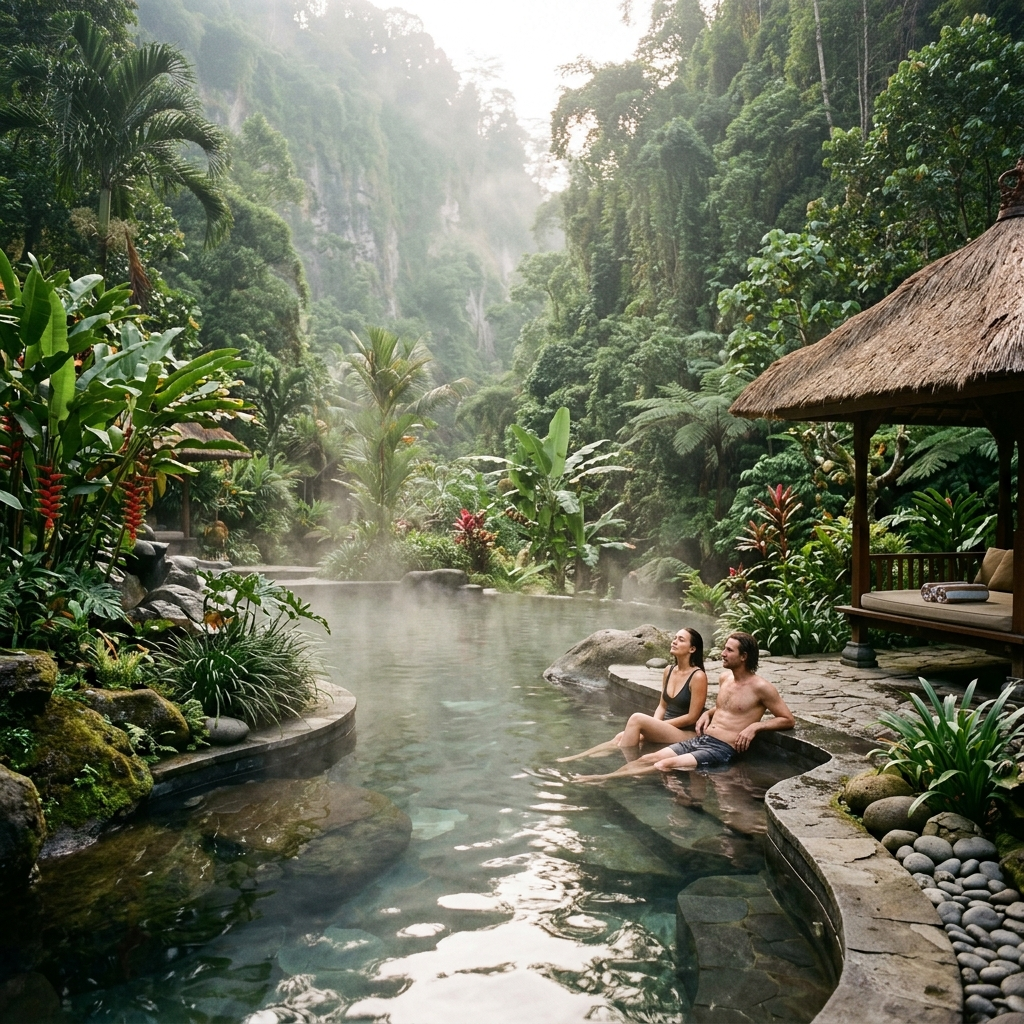
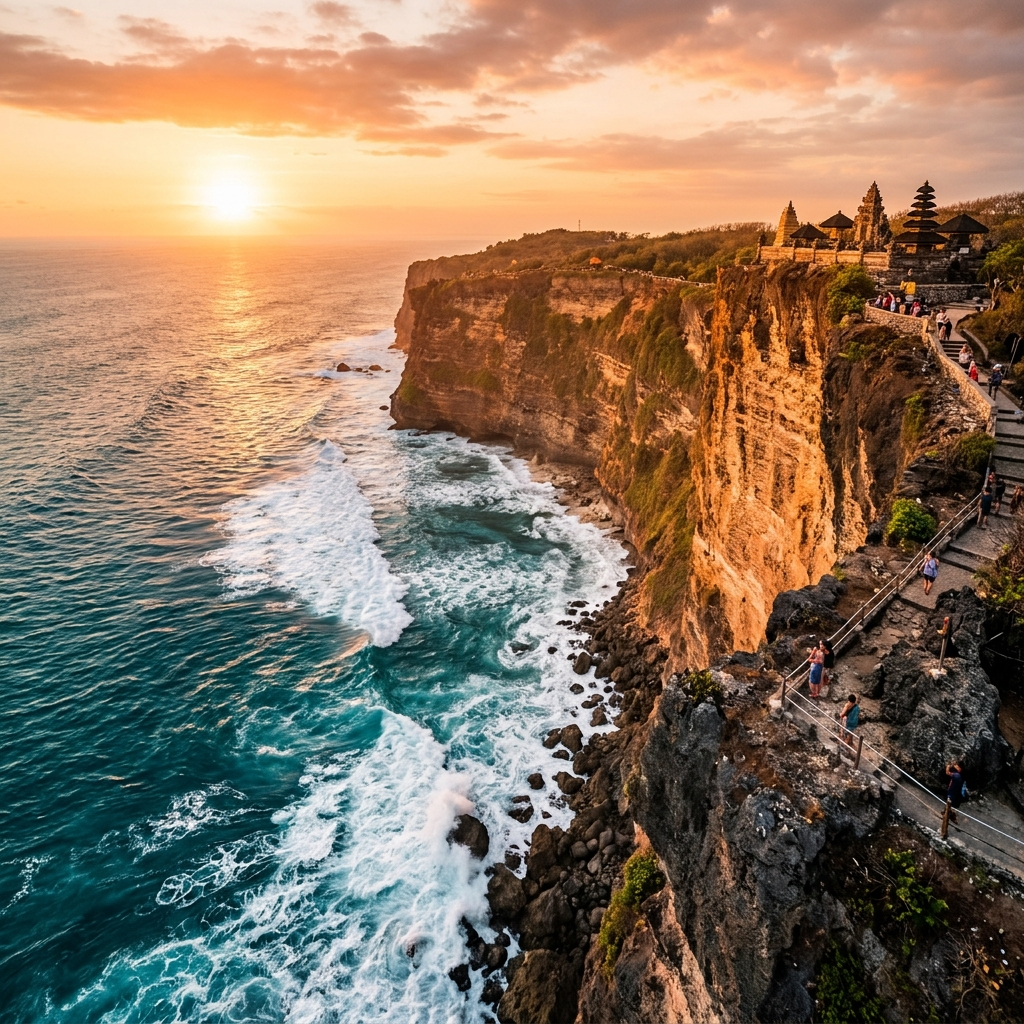
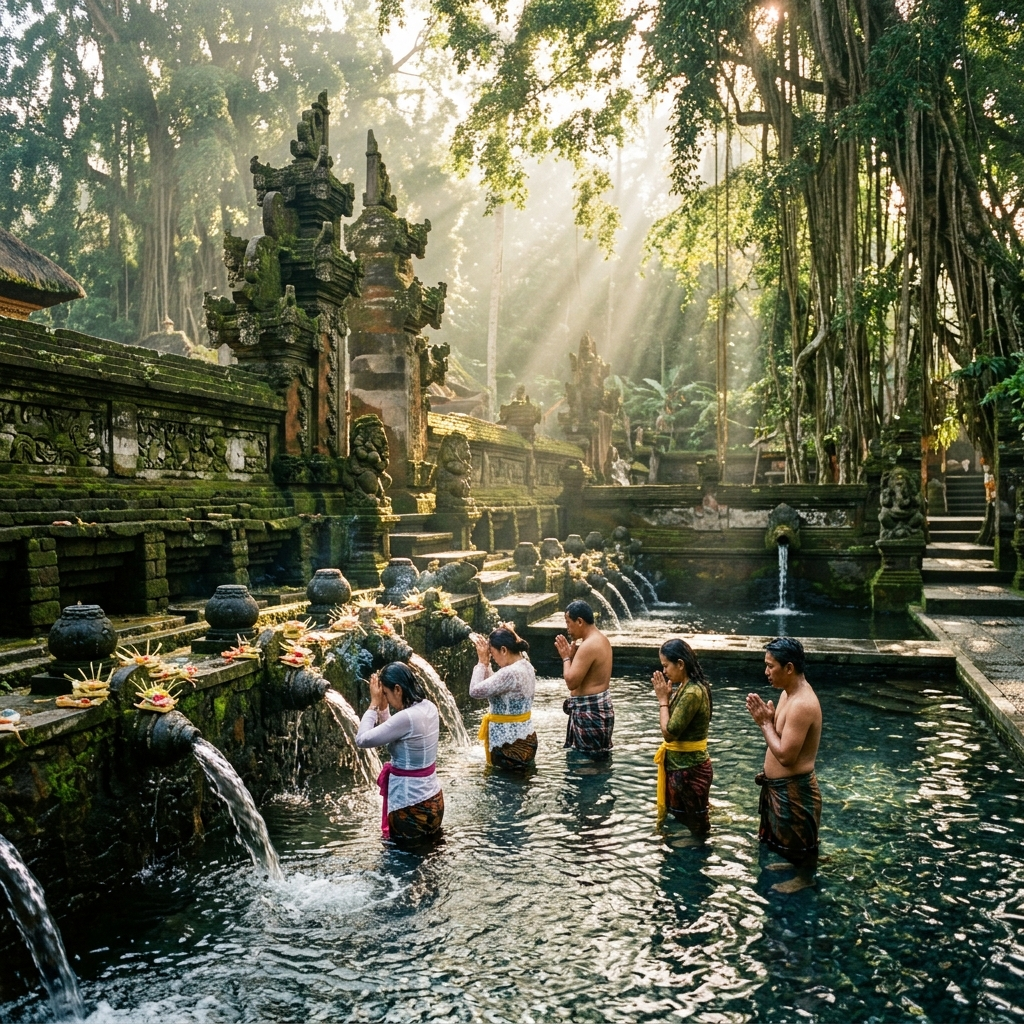
A curated collection of real, unedited moments captured on our travel routes. Click on any frame to expand in full lightbox.
NatureLust is not a travel agency and we do not sell packages. We are a small group of people who have travelled Bali intimately and who build every itinerary around one traveller, one family or one group at a time. The questions below are the ones we are asked most often. If yours is not here, write to us — we would much rather have a conversation than have you guess.
We are a small, Bali-focused travel outfit founded by Pramod Kumar, a corporate executive of three decades who fell hard for the island and never quite recovered. On the ground in Bali, the work is led by Seyni — Bali-born, a nature lover, and far more useful than any call centre. She brings over eight years of guiding and logistics experience, an insider’s understanding of local culture and tradition, and the kind of road knowledge that only comes from driving the island yourself for years.
Agencies sell inventory. We build itineraries. The difference shows up in three places:
We speak to you first. Before any itinerary is drafted, we understand your interests, pace, budget and the reason you are travelling at all.
We only recommend what we have done ourselves. Every place, road, restaurant, guide and activity on your plan has been personally experienced by someone on our team. That is our definition of "curated".
We are present without hovering. From landing to departure, we are with you — the being-there-only-when-you-want-it kind of back-up.
No. Every itinerary is built from scratch after a conversation with you. Two families travelling the same week will get two different plans, because they are two different families.
Both. We handle solo travellers, couples, families, multi-generation groups, friends’ groups, and corporate teams looking at Bali for offsites, incentives and MICE. We also design women-only itineraries and gentler, slower-paced itineraries for senior travellers.
All of it, and then some. Our five core themes are Volcanoes, Jungles & Falls, Beaches, Adventure and Spirituality — but most itineraries blend them. We also arrange trips to neighbouring islands such as Nusa Penida, Lembongan, the Gilis, Komodo, Raja Ampat, and Bukit Lawang in Sumatra where the interest justifies it.
Write to [email protected], WA: +919845945801, or use the contact form on www.naturelust.org. We will set up a call, understand what you are after, and come back with a draft itinerary. A couple of rounds of back-and-forth later, you will have a plan that actually fits you.
For most trips, six to ten weeks is comfortable. For the July–August and December–early January peaks, or if you want a specific villa or a private liveaboard, three to six months is far safer. We have put together good trips at three weeks’ notice — but you trade away choice, not quality.
5 to 6 nights: a focused first taste — one southern base plus Ubud.
7 to 9 nights: the sweet spot. South Bali, Ubud and either the east, north or a nearby island.
10 to 14 nights: Bali unhurried, with time for Nusa Penida, Amed, Munduk or a Komodo/Raja Ampat extension.
Anything under four nights and you will spend a disproportionate share of it in traffic.
Bali is a year-round destination, but the character changes. April to October is the drier season and the most reliable for trekking, diving and beach days. November to March is greener, wetter and far quieter, with rain that usually arrives in short heavy bursts rather than all day. Some experiences have their own calendar — river rafting rapids are strongest from December to March, while May to August gives calmer water. We will match the season to what you actually want to do.
We advise on flights and will tell you honestly which routings and timings work; ticketing itself is usually best done by you or your corporate travel desk. Accommodation, transport, guides, experiences and permits we arrange end to end — and we will recommend stays we have personally stayed in or inspected, across villas, boutique hotels and resorts.
Yes, and most travellers do. Small changes on the ground are almost always possible. Changes that touch confirmed hotels, flights, permits or liveaboard berths may carry supplier charges, which we will always show you before anything is committed.
Yes, but it is straightforward. Indian nationals are eligible for a Visa on Arrival, or the e-VOA applied for online before you fly. The VOA permits a stay of up to 30 days and can be extended once for a further 30 days. Applying for the e-VOA in advance lets you skip a queue at Ngurah Rai Airport, which on a busy evening is worth a great deal.
Fees, forms and rules are revised from time to time. Always confirm the current position on the official Indonesian immigration portal before you travel, and we will flag anything we know has changed.
It is a one-time regional tourism charge payable by every international visitor to Bali, entirely separate from your visa fee. Unless we have specifically told you otherwise in writing, it is not included in our costing — it is paid directly by you through the official portal (www.lovebali.baliprov.go.id), and you keep the QR receipt, which can be checked at the airport and at some attractions.
Indonesia uses the All Indonesia Arrival Card, a single unified digital form that combines immigration, customs, and health declarations. You must complete this free form online within 72 hours (3 days) before your arrival via the Official All Indonesia Portal: www.allindonesia.imigrasi.go.id
Yes. Fake levy websites are common and they overcharge as well as harvest card details. Type the official .go.id address yourself rather than clicking on a sponsored ad, ignore anyone offering a "priority lane" over WhatsApp, and never hand cash to someone claiming to collect it in person. If in doubt, ask us and we will point you to the correct link.
Indonesia treats overstaying seriously — there is a per-day fine and, in longer cases, the risk of an entry ban. Note your expiry date, set a reminder, and if you are considering an extension, start the process well before the 30 days run out rather than in the final week.
No vaccination is mandatory for Indian travellers entering Bali for tourism, though routine travel vaccinations are commonly recommended and malaria risk in the main tourist belts is low. This is a medical question, not a travel-agent one — please consult your doctor or a travel clinic for advice specific to you.
We quote a single, itemised cost for the itinerary we build for you, so you can see what sits where. Costs vary enormously with the standard of stay, the season, group size and the experiences chosen — which is precisely why we do not publish package prices.
Usually included: private transport with driver, guides, entry tickets and permits for the planned activities, and our on-ground coordination for the length of your stay.
Usually excluded: accommodation, international airfare, visa and levy fees, travel insurance, meals not specified in the itinerary, personal expenses, tips, and anything added spontaneously once you are there.
Your quotation will always state both lists explicitly. If something is ambiguous, ask — we would rather over-explain than have you discover a gap in Bali.
Payment is made in full on finalisation of the tour, and in any case no later than 15 days before your travel date. This is what allows us to confirm and lock in hotels, guides, permits and experiences on your behalf — in peak season, availability moves quickly and unconfirmed holds do not survive. Bookings made within 15 days of departure are payable in full at the time of confirmation. We will never ask you to pay a supplier in Bali for something you have already paid us for.
The local currency is the Indonesian Rupiah. Cards are widely accepted in hotels, established restaurants and larger stores, but cash still rules at warungs, local markets, small operators, temple donations and parking. Carry some cash, use ATMs attached to bank branches rather than standalone machines on the street, and change money only at authorised counters — never with a tout offering a rate too good to be true.
It is not compulsory, but it is genuinely appreciated by drivers, guides, boat crew and villa staff who work long days for you. We are happy to suggest sensible amounts so you are neither under- nor over-doing it.
Yes. You are met on arrival at Ngurah Rai (DPS) and taken to your first stay. From that point until we see you off, transport and coordination are handled.
Private vehicle with a driver, for almost all itineraries. Bali’s distances look tiny on a map and behave very differently in practice — Ubud to Amed or Munduk is a proper half-day. Building the day around traffic rather than against it is one of the more useful things we do for you.
Only if you already ride confidently, hold a valid international permit, wear a helmet and understand that your insurance may not cover you otherwise. Bali’s roads are unforgiving of inexperience. For those who genuinely want two wheels, we arrange guided motorbike expeditions with proper equipment and support, which is a very different proposition from hiring a scooter off the street.
Wherever fits the trip: private pool villas in Seminyak or Canggu, jungle retreats around Ubud, cliffside stays in Uluwatu, quiet beach properties in the east and north. Most well-built itineraries use two or three bases rather than one, so you are not driving three hours each way to see the island.
Very much so. Bali has an unusually strong plant-based food culture and Ubud in particular is exceptional for it. Indian food is widely available in the southern belt. Tell us about Jain, vegan, halal, gluten-free or allergy requirements at the planning stage and we will brief the properties and restaurants in advance.
Bali is broadly safe and welcoming, and solo and women-only groups travel there comfortably. The usual sense applies: secure your valuables, be alert around ATMs and money changers, respect ocean conditions and swim only where flagged, and be cautious on the roads. Our on-ground team is reachable throughout your stay, and for women-only groups we can arrange women guides and drivers.
A sarong and sash are required at temples and are usually available at the entrance. Dress modestly, do not climb on shrines or stand above a praying person for a photograph, walk behind rather than in front of anyone at prayer, and follow the local convention that menstruating women do not enter temple grounds. Your guide will quietly steer you through the rest.
No. English is spoken widely across the tourist and hospitality economy, and our guides are fluent. A few words of Bahasa Indonesia will nevertheless earn you disproportionate goodwill.
Volcanoes: a sunrise trek up Batur, or the far tougher Agung for serious walkers, with the caldera and lake below.
Jungles & Falls: the waterfall belt around Munduk, Sekumpul and Gitgit, and the rice terrace country.
Beaches: the southern sweep from Seminyak to Uluwatu, the black sand of the east, and the cliffs of Nusa Penida.
Adventure: white water rafting, ATV quad biking, diving, kayaking and canyoning.
Spirituality: water purification rituals, temple ceremonies, yoga and meditation, and Balinese healing traditions.
The two main rivers are the Ayung near Ubud and the Telaga Waja near Sidemen. The Ayung is graded Class II–III and is the gentler of the two; the Telaga Waja is Class II–IV and ends with a four-metre drop that sounds far more alarming than it is. Neither is especially intense, and both are predominantly safe with a licensed operator. The real reward is the scenery — cascading falls, paddy fields, towering cliffs and dense forest on either side. Allow a full day if you want both. Rapids are strongest December to March; May to August gives calmer water.
Bring minimal clothing plus a change, a wet bag, a waterproof camera and sunscreen.
Spectacular, and arguably the most enjoyable way to see the island’s range in a single outing — river crossings, volcanic beds, paddy fields, bamboo forest, jungle, caves, tunnels and beaches. Runs from about ninety minutes to a full day. It is open to a wide age band, which makes it one of the few genuinely good group and family activities. Wear closed-toe shoes with grip, long trousers and long sleeves, and take the safety briefing seriously.
It depends entirely on the trek. Batur at sunrise is a manageable pre-dawn climb for anyone reasonably active; Agung is a long, demanding night ascent for experienced hikers only. Rice terrace and waterfall walks are gentle. Tell us your fitness honestly at the planning stage — we would far rather design a good day you enjoy than an ambitious one you endure.
Yes — from day dives around Amed, Tulamben and Nusa Penida to full liveaboard expeditions in Komodo and Raja Ampat, arranged with expedition partners we have worked with directly. Liveaboards need long lead times and are strongly seasonal, so raise these early.
We do. Bali has genuinely good courses in dramatic settings, and we build golf-led itineraries, including multi-destination versions extending to Bintan and Batam, with tee times, transfers and non-golfing companions all accounted for.
Many are, with the right selection and pacing. Waterfall walks, beach days, rice terraces, cooking classes, gentle rafting and cultural experiences work well across generations. Sunrise volcano treks and the harder adventure activities generally do not. Multi-generation trips are one of our favourite things to design precisely because they require this kind of thought.
Yes, and we insist on it. Take a policy that covers medical treatment, evacuation, trip cancellation and the specific activities you intend to do — many standard policies exclude adventure sports, diving and motorbiking unless you declare them. Read that exclusions list before you buy.
Bali has good private hospitals and international-standard clinics in the southern belt, and pharmacies are easy to find. Facilities in remote north and east Bali are more basic. Carry your regular prescription medicines in original packaging along with the prescription, and tell us in advance about any condition that could affect activity choices.
No. Stick to bottled or filtered water, including for brushing teeth if you are sensitive. Ice in established restaurants and hotels is generally fine. Most stomach upsets in Bali come from being over-adventurous too early in a trip rather than from anything sinister.
You will have direct contact numbers for our Bali team, monitored throughout your stay. Whether it is a missed connection, a change in weather, a medical issue or a plan that simply is not working, call us — sorting exactly this kind of thing out is a large part of why we exist.
Yes. Offsites, leadership retreats, incentive trips, team-building and small conferences are all within scope. We handle venues, AV, group transport, structured team activities, dinners and free-time options, with a single point of coordination so your HR or admin team is not fielding twenty vendors.
We do, and they are among our most-requested. These are built around comfort, pacing and safety, with women guides and drivers where preferred, and a mix of wellness, culture, food and as much or as little adventure as the group wants.
Slower itineraries, shorter driving days, accessible sites, thoughtfully chosen accommodation and unhurried mornings. Bali rewards a slow pace, and honestly, most travellers of every age enjoy the slower version more.
Yes — honeymoons, anniversaries, milestone birthdays and vow renewals. Private villas, cliffside dinners, sundowner cruises, floating breakfasts, photographers: all arrangeable, and all better when planned rather than improvised.
No minimum — we work happily with solo travellers and couples. Large groups are possible with adequate lead time; beyond a certain size, hotel and transport availability, not our willingness, becomes the limiting factor.
Once a tour is finalised and paid for, cancellations are non-refundable. This is not arbitrary: on finalisation we immediately commit your money onward to hotels, villas, guides, drivers, boat operators, permit authorities and experience partners, most of whom hold no-refund or heavily restricted terms of their own. Those commitments cannot be unwound once made.
Where a supplier does return funds to us in a particular case, we will pass that amount on to you in full. Where possible we will also try to move your dates rather than lose the trip entirely, though this depends entirely on supplier availability and cannot be promised in advance.
For this reason we ask every traveller to hold travel insurance with cancellation and curtailment cover. Illness, family emergencies and visa refusals do happen, and insurance — not our policy — is what protects you against them. Please buy it at the time of booking rather than closer to travel, as most policies only cover events arising after the cover starts.
Bali’s weather is changeable and treks, water activities and boat crossings are occasionally called off for safety. This is not a cancellation on your part and we treat it differently: we reschedule within your dates wherever possible, or substitute an alternative experience of comparable quality at no extra cost to you. Where a supplier refunds us for an activity that could not run at all, we pass it on. Safety calls are never negotiable, however disappointing they are on the day.
You will have Pramod for planning and commercial matters, and Seyni and her team on the ground in Bali for everything day to day. You will not be handed to a rotating queue of strangers.
Tell us as early as you can. Extensions usually depend on your accommodation’s availability and your visa validity, both of which get harder the longer you leave them. Where the visa needs extending, start the process well before it expires.
Directly and candidly, to [email protected]. We are small enough that every piece of feedback reaches the person who can act on it — and honest criticism has improved our itineraries more than any amount of praise.
The best conversations we have with travellers are the ones that start with a question this document did not answer. Ask us anything — about the island, the seasons, the food, the roads, the temples or the trip you have been half-imagining for years.
A curated collection of real, unedited moments captured on our travel routes. Click on any frame to expand in full lightbox.