Ridden June 2026
The Long Way East
Fourteen days, five islands and one 500cc Royal Enfield — from Bali to the Komodo dragons
Ridden June 2026 · Approx. 2,000 km
There is a moment on the Sape ferry, somewhere in the middle of the strait with Sumbawa gone and Flores not yet risen, when you understand that you are no longer on holiday. You are on a journey. The distinction matters.
I have lived in and out of Bali for years. I have ridden most of it — the Kintamani highlands before dawn, the west coast road to Gilimanuk, the quiet lanes behind Sidemen where the rice terraces fall away in staircases. I thought I knew what riding in Indonesia meant.
Then, this June, I rode east. Bali to Lombok to Sumbawa to Flores, ending at Labuan Bajo and the Komodo islands. Fourteen days. Five ferries. One 500cc Royal Enfield that I came to regard, by the end, as something closer to a colleague than a machine. I rode solo, with a guide ahead of me and a support vehicle somewhere behind, and I can say plainly that it was the most complete travel experience of my life.
This is what those fourteen days were actually like.
| The route | Bali → Lombok → Sumbawa → Flores → Labuan Bajo → Komodo National Park |
| Duration | 14 days |
| The bike | Royal Enfield 500cc |
| Format | Solo rider, dedicated guide, support vehicle throughout |
| Season | June — the beginning of the dry season, and the right call |
| Difficulty | Expert / long-distance. This is not a beginner's ride. |
PART ONE
Bali to Lombok — leaving the familiar
Day 1 · South Bali → Padang Bai → Lembar → Senggigi
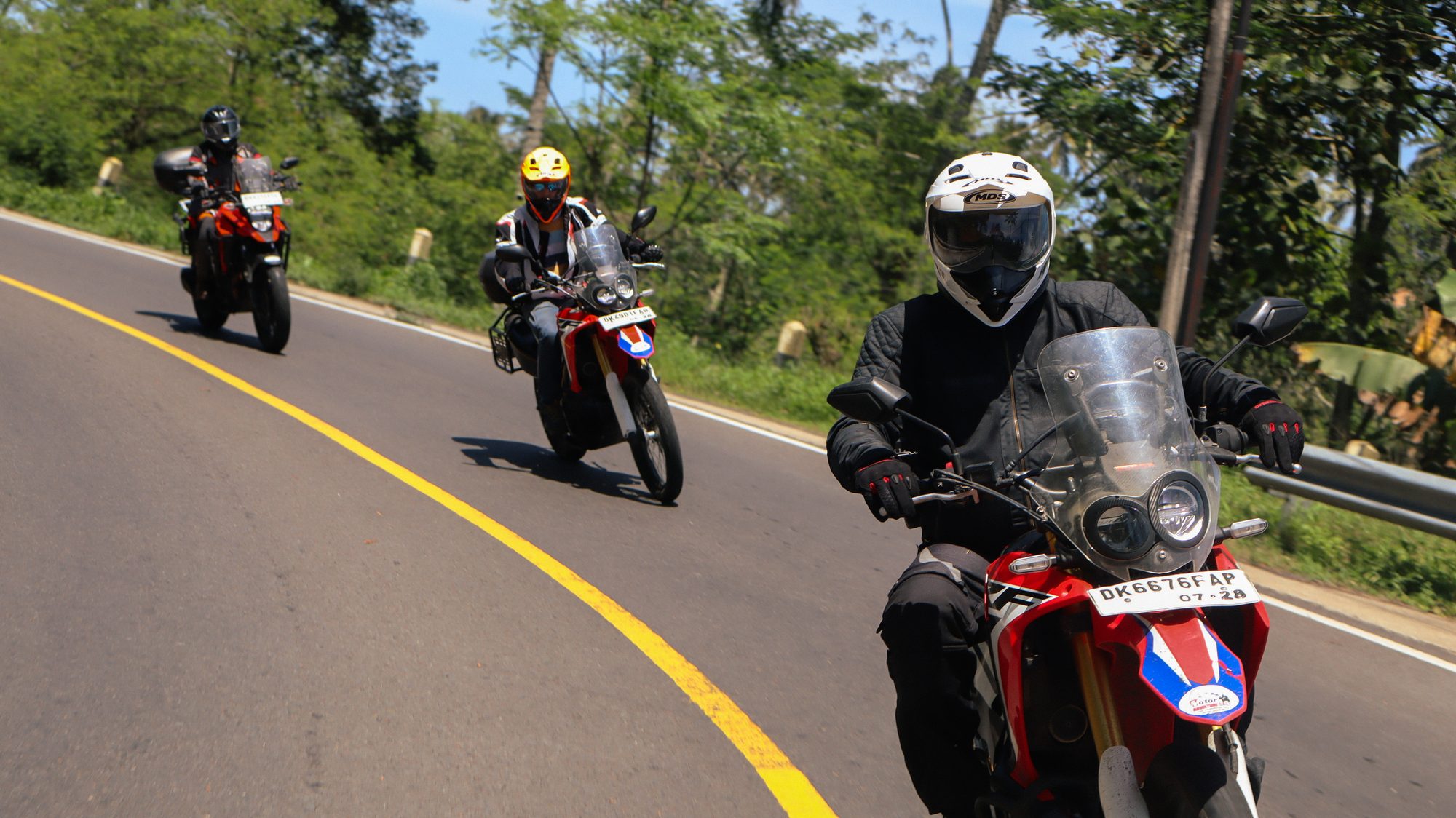
The ride begins the way most eastward journeys from Bali begin: unglamorously, in traffic, heading for the ferry port at Padang Bai. The Enfield settles into its rhythm somewhere past Klungkung — that unhurried thump that Enfield riders will recognise and everyone else finds slightly absurd. It is not a fast bike. It was never going to be a fast bike. Over fourteen days I came to think of that as the point.
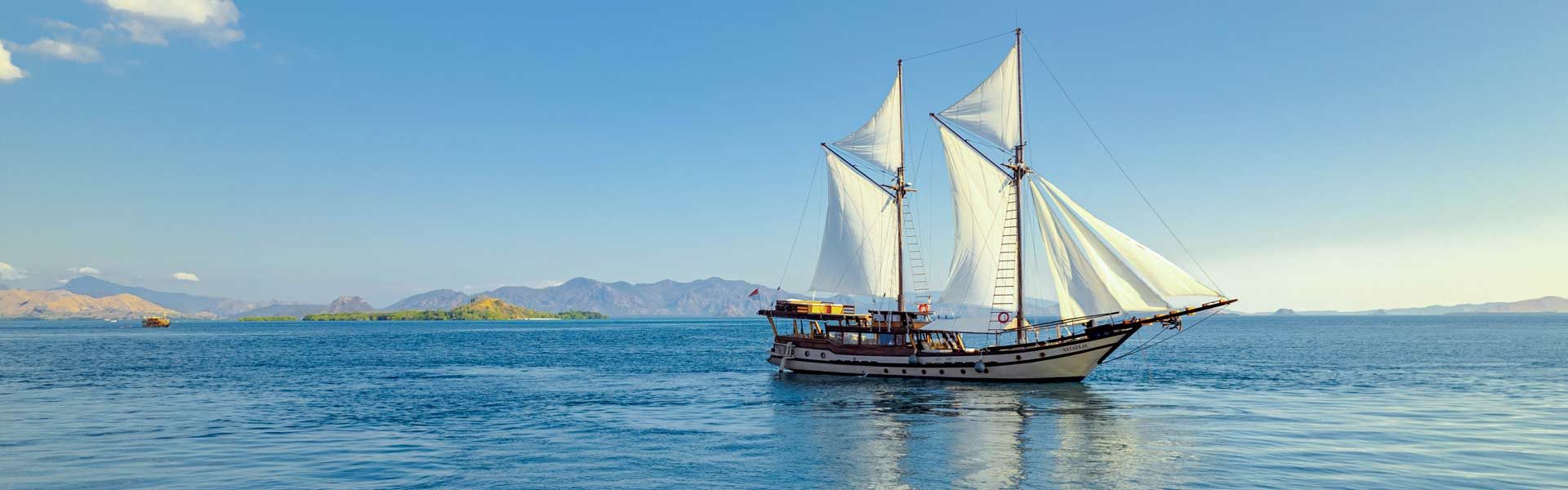
The Lombok Strait crossing takes most of an afternoon. You stand on the upper deck, the bike lashed down below among trucks and crates of chickens, and you watch Bali reduce itself to a green smudge. By evening I was rolling into Senggigi with salt on my visor and the sun going down over the water on my right.
Day 2 · Senggigi → Senaru → Sembalun
Lombok is the first correction to your assumptions. It is drier than Bali, emptier, less performed. The road climbs north and then east around the flank of Rinjani, and the corners come one after another with almost no traffic to interrupt them — long, clean, cambered sweepers with a volcano on your left and a drop to the sea on your right.
We stopped at Senaru for coffee and again above Sembalun simply because the view demanded it. Rinjani filled the windscreen. Nobody spoke for a while. My guide, who has ridden this road more times than he can count, still got off the bike to look at it.
On day two I stopped taking photographs of the mountain and started just looking at it. That is roughly when the trip actually started.
PART TWO
Sumbawa — the long empty middle
Day 3 · Sembalun → Kayangan → Poto Tano → Sumbawa Besar
Sumbawa is the part of this route nobody photographs, and it is the part that changes you. The ferry from Kayangan drops you at Poto Tano into a landscape that has nothing to do with Bali at all — dry savannah hills the colour of straw, buffalo standing in roadside water, villages every twenty kilometres and nothing whatsoever in between.
The riding is fast, open and hot. You settle into a posture and hold it for hours. This is where the Enfield's torque starts to feel like a kindness rather than a limitation: you sit at a steady speed, the engine loafing, and the island simply passes.
Day 4 · Sumbawa Besar → Hu'u (Lakey Peak)
A long day, and the one I would warn people about. The road south to Hu'u narrows and deteriorates in places, and the heat by early afternoon is genuinely punishing. But Lakey Peak at the end of it is a surfers' outpost with a handful of losmen, warungs on the sand, and an evening that belongs entirely to whoever has bothered to get there.
I ate grilled fish with my hands at a plastic table twenty metres from the break and could not have told you what day of the week it was.
Day 5 · Hu'u → Bima
Back inland and east, climbing through the hills above Dompu with the coast reappearing in flashes on the right. Bima is a working harbour town rather than a destination, and that is fine — by day five you want a shower, a bed and a bike that starts in the morning, and Bima provides all three without asking anything of you.

PART THREE
The Sape crossing
Day 6 · Bima → Sape → Labuan Bajo (by sea)
The Sape ferry is the hinge of the whole trip. It runs seven or eight hours across open water to Flores, and there is nothing to do aboard it but sit with strangers, drink very sweet coffee, and watch the sea.
This is the crossing where the distance becomes real. You have ridden for five days to reach a port most people have never heard of, in order to board a boat to an island most visitors reach by aeroplane in ninety minutes. Somewhere in the middle of that strait, with nothing in sight in any direction, the trip stops being a holiday.
Five ferries in fourteen days, and I boarded every one of them expecting dead time. Every one of them turned out to be where the journey actually happened.
PART FOUR
Flores — the spine
Day 7 · Labuan Bajo → Ruteng
The Trans-Flores highway starts here, and within an hour you understand why riders talk about it the way they do. It is a road with no straight sections worth the name — a continuous, climbing, falling, folding ribbon that crosses the spine of the island and does not stop doing so for four hundred kilometres.
Ruteng sits high and cold in the hills, a Catholic mission town with mist coming down in the afternoon. I put on a jacket for the first time since Bali.
Day 8 · Ruteng → Bajawa (the Ngada highlands)
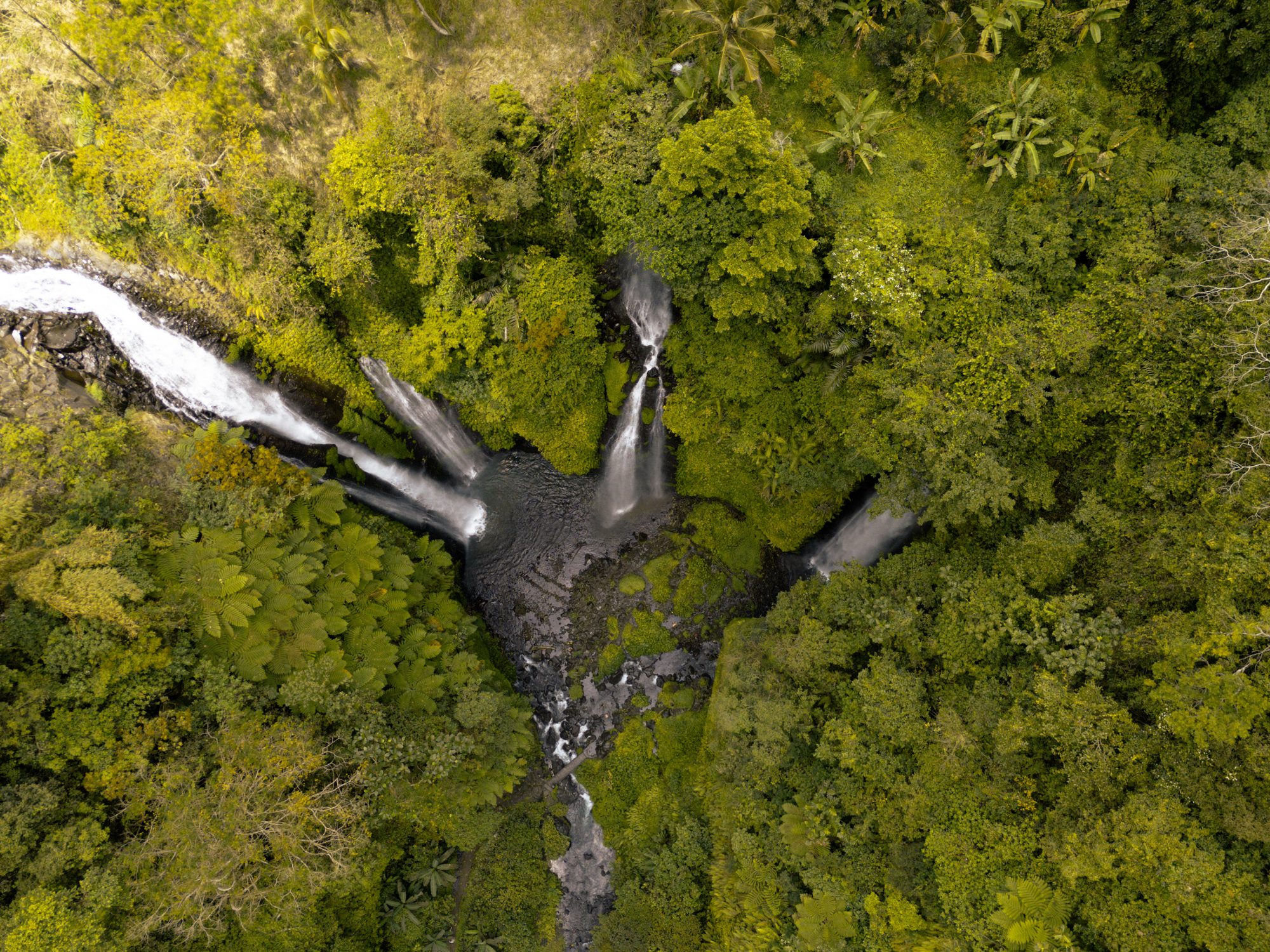
The day I would keep if I could only keep one. The road runs through the Ngada highlands, and the traditional villages here — Bena and Luba among them — are not reconstructions built for visitors. They are lived in. Thatched houses arranged around ancestral stone platforms, facing the volcano Inerie, with families going about an ordinary Tuesday around you.
I was invited to sit. I sat. Coffee appeared, grown two hundred metres away. Very little was said, because very little needed to be, and I left an hour later without a single photograph I would call good and with the clearest memory of the whole fourteen days.
You cannot get to the Ngada highlands quickly, and that is exactly why they are still what they are.
Day 9 · Bajawa → Riung or Ende
East again, the landscape turning volcanic and strange — black sand beaches on the south coast, blue stone shingle that locals gather by hand, and the road hugging cliffs above a sea that goes from turquoise to deep indigo within fifty metres of the shore.

Day 10 · Ende → Moni · Kelimutu at dawn
You do not sleep much before Kelimutu. You are up at half past three, riding a cold mountain road in the dark, and then walking the last stretch to the crater rim with a torch and a queue of head-torches ahead of you in the blackness.
Then the light comes, and there are three lakes below you in three different colours, in the same crater, changing on their own schedule for reasons the geologists explain and nobody really accepts. I have seen a great many sunrises. This one was not like the others.
Day 11 · Moni → Maumere
A gentler day, dropping out of the highlands towards the north coast with the road opening up again. Maumere is a diving town with a long, easy waterfront and the first proper sense that the ride is entering its final phase.
Day 12 · The turn west — back along the spine
Riding a road you have already ridden is supposed to be an anticlimax. It was not. You know the corners now. You know which villages have the good coffee. You ride it faster, smoother and with far more pleasure than you did going out, and you understand for the first time how much attention the first pass had actually taken.
PART FIVE
Komodo — where the road ends
Day 13 · Labuan Bajo → Komodo National Park
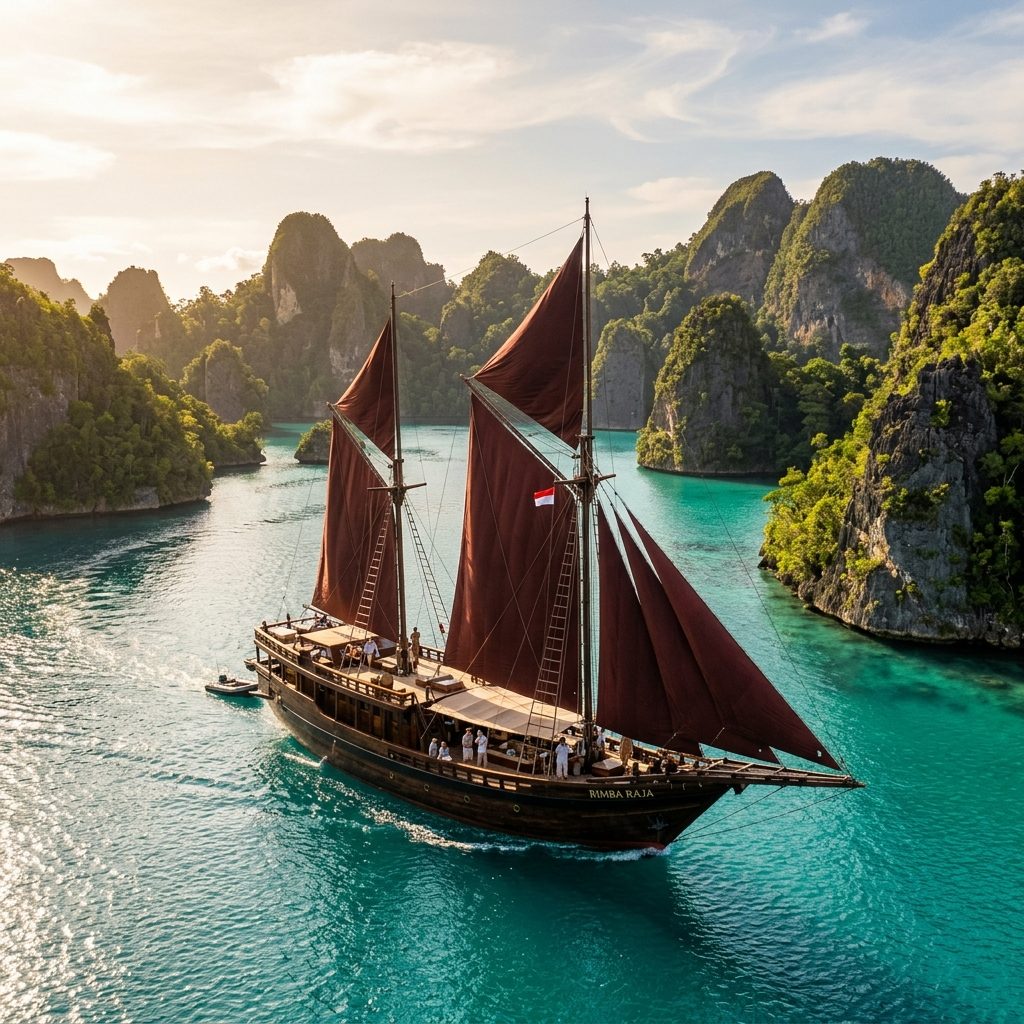
The bike stays on the dock. After thirteen days of it, handing over the keys and stepping onto a boat feels like a small bereavement — and then the park does what the park does.
- Komodo dragons on Rinca, at a distance a ranger decides rather than you do. Three metres of animal that has been doing this for a very long time and is entirely uninterested in you.
- Padar's ridge, and the view along three bays that every photograph you have seen of this park is trying and failing to convey.
- Pink Beach — genuinely pink, from crushed red coral in the white sand, one of a handful of such beaches on the planet.
- Snorkelling in water so clear the boat appeared to be floating on nothing at all.
Day 14 · Labuan Bajo → Denpasar
You hand back the keys. You fly home in ninety minutes over an archipelago that took you thirteen days to cross by road and sea, and you look down at Sumbawa going past under the wing and feel something complicated about it.
What I took away
The bike was right. A 500cc Royal Enfield is not the fastest choice for this route, and it is absolutely the correct one. The Trans-Flores highway is not a road you want to rush. The Enfield's torque, its low-speed manners on broken surfaces, and the honest weight of it in fast corners suited fourteen straight days of riding better than anything sharper would have. It also has the considerable advantage of being repairable by almost anyone, almost anywhere in Indonesia.
Riding solo with a guide is the format. I had the road to myself — my own pace, my own stops, nobody else's schedule — while someone who knew every kilometre rode ahead of me. No group dynamics. No waiting. No wrong turns at unmarked junctions in the dark. And a support vehicle carrying luggage meant I rode light for two straight weeks, which by day nine matters enormously.
June is the window. The dry season had just settled in. Clear mornings, dry surfaces on the mountain sections, the Sape crossing calm enough. Attempt this in January and you are riding the Flores highlands in serious rain, on roads with real drops beside them. Timing is not a detail on this route; it is the whole plan.
Flores deserves far more than it gets. Most visitors fly into Labuan Bajo, board a boat to see the dragons, and fly out having seen nothing of the island itself. They miss Ruteng. They miss the Ngada highlands. They miss Kelimutu at dawn. The dragons are extraordinary — but they are the postscript, not the story.
Ferries are the journey, not the interruption. I boarded five of them expecting dead time and got the opposite. That is where you meet people. That is where the distance becomes real to you in a way that no flight will ever manage.
Fourteen days on a single-cylinder motorcycle across five islands will teach you more about Indonesia than fourteen years of arriving somewhere by aeroplane.
If you are thinking about it
This is an expert-level, long-distance expedition. It is not a first motorcycle tour and it should not be anyone's first ride in Indonesia. A few honest notes before you decide.
- You need real road hours. Six to eight hours in the saddle on consecutive days, on surfaces that vary from good tarmac to broken gravel, in heat. Comfort on a loaded bike in traffic and on loose surfaces is the minimum.
- The season is not negotiable. May to September. Outside that window the Flores mountain sections become genuinely dangerous rather than merely demanding.
- Ride it solo or in a very small group. Two or three riders maximum. Beyond that the ferries, the accommodation in the smaller towns and the pace all start to work against you.
- Accommodation is honest, not luxurious. Labuan Bajo and Senggigi are comfortable. Hu'u, Bima and Moni are simple, clean and entirely adequate. If that is a problem, this is not your trip.
- Build in a spare day. Ferries are weather-dependent and schedules move. Fourteen days with no slack is fourteen days of quiet anxiety.
Routes are indicative and subject to road, ferry and weather conditions. All riders must hold a valid motorcycle licence and appropriate travel insurance.
Frequently Asked Questions
How long is the Bali to Komodo motorbike route?
Fourteen days and roughly 2,000 km, running Bali → Lombok → Sumbawa → Flores → Labuan Bajo → Komodo National Park, including five ferry crossings. The ride ends at Labuan Bajo, with a ninety-minute flight back to Denpasar.
What is the best time of year to ride Bali to Flores?
May to September, during the dry season. June is ideal — clear mornings and dry surfaces on the mountain sections. Attempting the Flores highlands in the January to March wet season means riding steep, exposed roads in serious rain, and is not recommended.
What motorcycle is used, and do I need my own?
A 500cc Royal Enfield is the standard machine for this route, with adventure bikes also available. Bikes are provided; you do not need to bring your own. The Enfield's torque and low-speed manners suit fourteen consecutive riding days better than anything sharper, and it can be repaired almost anywhere in Indonesia.
How difficult is the ride, and what experience do I need?
This is an expert-level, long-distance expedition and not a first tour in Indonesia. Expect six to eight hours in the saddle on consecutive days, in heat, on surfaces ranging from good tarmac to broken gravel. You need to be comfortable on a loaded bike in traffic and on loose surfaces, and you must hold a valid motorcycle licence and appropriate travel insurance.
Do I ride in a group, and is luggage carried?
The expedition runs solo or in very small groups of two to three riders, with a dedicated guide riding ahead and a support vehicle carrying luggage throughout. That keeps the pace your own and means you ride light for the full two weeks.
What is the accommodation like on the route?
Honest rather than luxurious. Labuan Bajo and Senggigi are comfortable; Hu'u, Bima and Moni are simple, clean and adequate. We also recommend building in one spare day, since ferry schedules are weather-dependent.